
From September 28 to October 1, the 36th Congress of the International Federation of Societies of Cosmetic Chemists (IFSCC) was held in Perth, Australia. Building on its continued work in skin science, ingredient science and product science, CHANDO Group participated in this international academic gathering for the twelfth year. This year, 20 research papers were accepted, setting a new record for the Group and placing it among the top five worldwide at this Congress.
Often described as the “Nobel Prize” of the cosmetics industry, IFSCC showcases research at the forefront of global cosmetic science. Since its first participation in 2015, CHANDO Group has had a total of 79 research contributions accepted over 12 years, consistently bringing Chinese beauty science to the forefront of the international academic stage. Behind this record is the comprehensive innovation system developed by CHANDO Group’s R&D Center over 25 years. With three scientific disciplines and four technology platforms, the Group has built end-to-end capabilities spanning foundational innovation and finished products, efficiently translating cutting-edge research into skincare benefits consumers can experience.
The Value of Fundamental Research Begins with Real Consumer Needs and Ultimately Serves Consumers
CHANDO Group believes that the value of fundamental research should extend beyond published papers and translate into products that meet real consumer needs. Among the 20 papers accepted at this IFSCC Congress, core technologies from several studies have already been incorporated into products across the Group’s brands. From ingredients sourced from the Himalayas’ extreme environments to targeted solutions for fatigue-related aging, and from barrier repair and pigmentation management to scalp care, cleansing technologies, sensory fragrance experiences and feminine intimate care, the Group translates research into applications across skincare and wellness.
This work is supported by three scientific disciplines. In skin science, studies ranging from longitudinal cohorts to epigenetic anti-aging research deepen understanding of Asian skin. In ingredient science, the Group explores resources unique to the Himalayas’ extreme environments to build a portfolio of proprietary core ingredients. In product science, consumer needs guide continuous improvements in efficacy. Each study starts with a real consumer need, seeks answers through fundamental research, and translates those answers into products, bringing cutting-edge science into the daily lives of hundreds of millions of consumers worldwide.
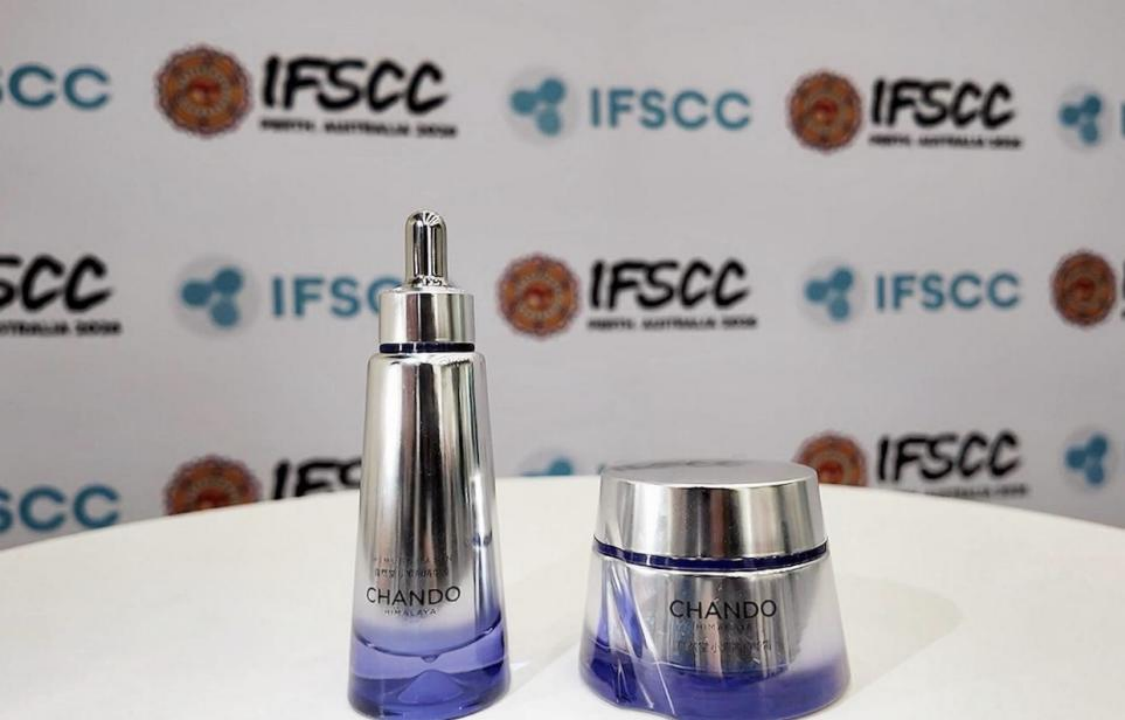
Photo: CHANDO’s Super Anti-Aging Little Purple Bottle range at IFSCC
From Population Insights to AI-Powered R&D: Targeting Fatigue-Related Aging
Anti-aging is an enduring theme in skincare, but the questions of which aspects of aging to target and how to address them have different answers for different populations. At this IFSCC Congress, CHANDO Group presented its latest research progress with two leading Chinese institutions.
For many years, global skin-aging research has largely focused on Western populations, leaving a lack of systematic longitudinal evidence on the characteristics, timing and contributing factors of skin aging among Chinese consumers. To address this gap, CHANDO Group and the Shanghai Institute of Nutrition and Health, Chinese Academy of Sciences, spent two years conducting a longitudinal cohort study quantifying facial skin phenotypes in a Chinese population. The study systematically compared facial aging phenotypes in more than 5,000 Chinese participants between 2018 and 2023. It precisely mapped changes in aging inflection points for six major wrinkle types and confirmed that, in recent years, facial wrinkle aging among Chinese women has been characterized by earlier onset, faster progression and an earlier transition into accelerated aging.
More importantly, the study found shorter sleep duration and smoking and drinking at younger ages in the Chinese population, suggesting an intensification of fatigue-inducing lifestyles. It also quantified, for the first time, the differing effects of insufficient sleep, smoking and drinking on various wrinkle types, confirming significant associations between multiple fatigue-inducing lifestyle factors and the earlier appearance of facial wrinkles. These findings update scientific understanding of skin aging in Chinese populations and advance anti-aging products from conventional, generalized approaches toward targeted solutions for fatigue-related aging: interventions tailored to specific lifestyles and wrinkle types, rather than broad concepts alone.
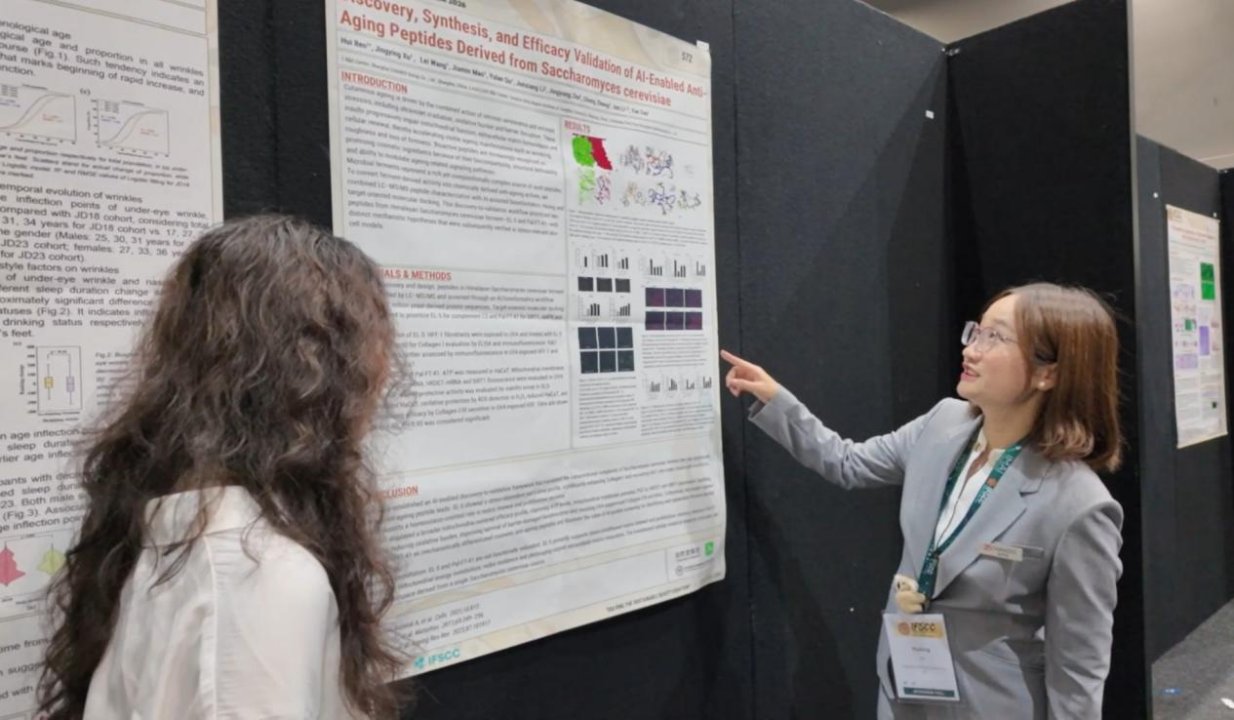
Photo: A CHANDO Group R&D scientist presents research on Ximoyin® Super Anti-Aging Peptide
Drawing on its in-depth insights into aging in Chinese populations, CHANDO Group is using AI to reshape ingredient R&D. Conventional discovery of active ingredients relies on experience-based screening, with long development cycles and low efficiency. In collaboration with the ACRDC R&D Center at the Yangtze Delta Region Institute of Tsinghua University, the Group built an AI-driven peptide discovery platform. Using AI-powered computational biology, it precisely screened and engineered candidates from more than 2.8 million yeast proteins to create a new ingredient, Ximoyin® Super Anti-Aging Peptide. By targeting PGC-1α, a switch for mitochondrial energy regulation, the ingredient promotes mitochondrial biogenesis and energy replenishment to address fatigue-related aging. It has already been incorporated into the seventh generation of CHANDO’s Super Anti-Aging Little Purple Bottle, launched in April 2026.
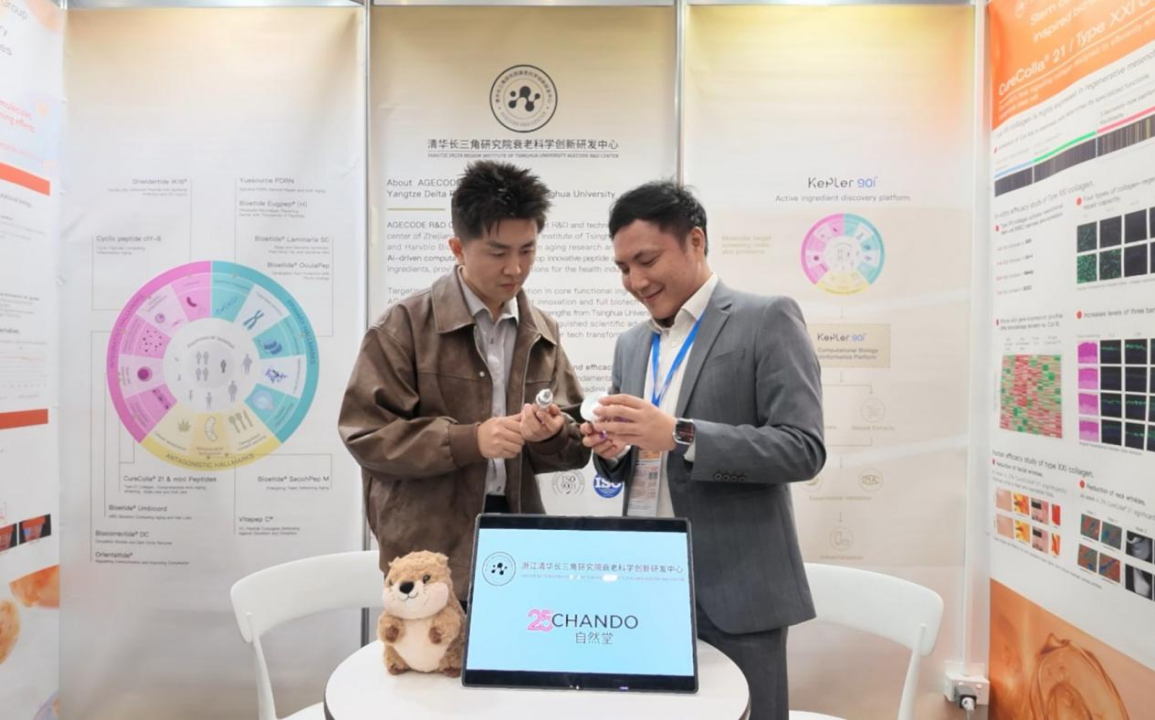
Photo: CHANDO Group × ACRDC, Yangtze Delta Region Institute of Tsinghua University
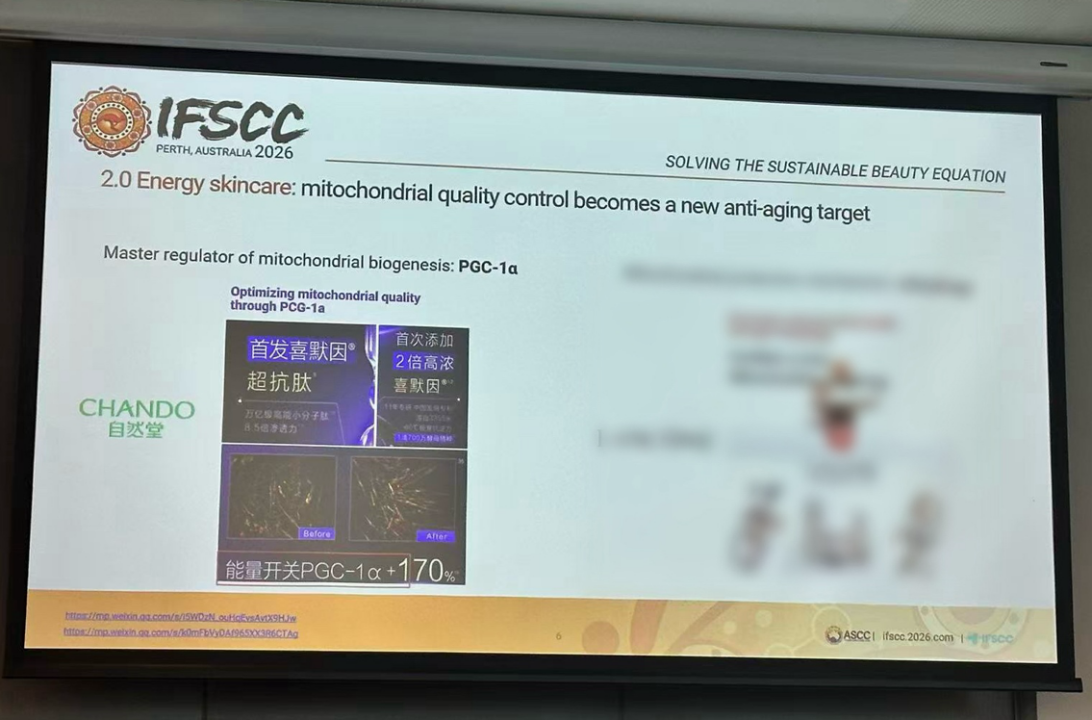
Photo: The Yangtze Delta Region Institute of Tsinghua University presents CHANDO’s Ximoyin Super Anti-Aging Peptide at the Congress
CHANDO Group is also advancing its work in longevity science. For the first time in the skin of Chinese women, a study identified the epigenetic regulator microRNA-1290 as a key epigenetic “switch” linking photoaging to telomere attrition. Its expression rises significantly after UV exposure, directly weakening telomere protection and accelerating skin aging. Treatment with Himalayan-derived Ximoyin filtrate and lysate significantly reversed this effect, protecting telomeres and slowing photoaging. The study provides a scientific basis for Ximoyin® to address aging at its source and supports the industry’s transition from experience-based anti-aging approaches to precise epigenetic regulation.
Exploring the Himalayas: Turning Extreme-Environment Resources into Sustainable Skincare Science
At this IFSCC Congress, CHANDO Group also shared its latest advances at the frontiers of ingredient science. The Himalayas are both the origin of the CHANDO brand and the starting point of its scientific innovation. Drawing on the region’s unique extreme-environment resources, CHANDO has established a complete ingredient development pathway: ecological resource exploration and collection → green process development → scientific efficacy validation. This creates systematic strengths in ingredients unique to these environments.
From yeast extracellular vesicles and yeast-derived PDRN to Saussurea laniceps callus and rose extracellular vesicles, a range of innovative Himalayan-derived ingredients continues to expand the possibilities of skincare science.
Yeast is the starting point of this research landscape. Drawing on distinctive Himalayan microbial resources, CHANDO Group developed a sustainable yeast-derived PDRN ingredient. While conventional PDRN is mostly extracted from salmon sperm, yeast-derived PDRN has a molecular structure closer to human DNA and delivers superior effects in promoting cellular renewal and collagen production. It has already been incorporated into flagship products such as CHANDO’s Little Purple Bottle Super Anti-Aging Cream and Peptide Serum Long-Wear Cushion Foundation.
Plant callus culture technology enables the sustainable use of rare plants from extreme environments. Saussurea laniceps callus is the world’s first new brightening ingredient from the snow-rabbit group of plants. Saussurea laniceps is a rare species unique to the high-altitude Himalayas and is classified in China as an endangered wild plant under Class II national protection. After obtaining approval, CHANDO Group’s botanical ingredient R&D team applied plant tissue culture technology in the laboratory, overcoming the resource constraints of traditional wild harvesting while enabling standardized mass production. Research confirmed that it delivers brightening effects at multiple levels, including cells and proteins, inhibits melanin production through multiple targets, and also provides antioxidant and skin-repair benefits. This overcomes the limitations of conventional brightening ingredients that rely on a single target and high concentrations. Extracellular vesicles derived from highland Rosa graciliflora callus likewise offer multiple skincare benefits, including barrier repair, anti-inflammatory soothing, protection against photoaging and firming. Nardostachys callus also outperforms wild Nardostachys in all three areas of sebum control, hair-loss prevention and hair-follicle nourishment.
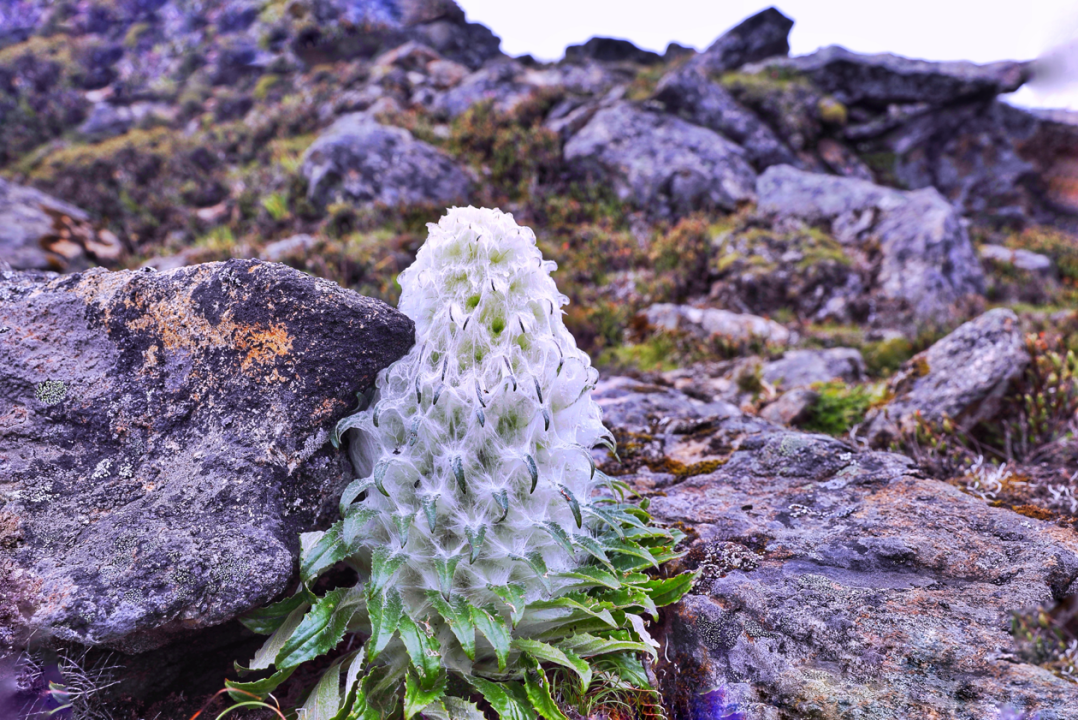
Photo: Saussurea laniceps
Highly active ingredients can be produced reliably at scale without harvesting wild plants. As sustainability becomes a shared priority across the global beauty industry, CHANDO Group’s callus culture technology offers an ingredient development pathway that combines efficacy with ecological protection.
In pigmentation management, CHANDO Group recognizes Asian women’s desire for a naturally brighter complexion achieved safely. Its approaches using snow lotus callus and a synergistic combination of matsutake and niacinamide overcome the single-target limitations of conventional brightening ingredients, enabling gentler, more sustained improvements in skin-tone evenness and radiance. The research provides scientific support for developing safe, effective brightening serums based on ingredient synergy.
Beyond Skincare: Exploring Scalp Health, Mood-Enhancing Fragrances and More
CHANDO Group’s research has long extended beyond facial skincare into a much broader range of fields.
At this IFSCC Congress, CHANDO Group further extended its latest skin-science findings into scalp care. Moving beyond conventional approaches to hair-loss prevention based on broad-spectrum antibacterial action or a single probiotic, the Group proposed a new approach centered on microbiome balance. It seeks to prevent hair loss through precise modulation of the scalp’s microbial community.
In feminine intimate care, CHANDO Group presented, for the first time, research progress in its newly established women’s health business area. Its research into microbiome regulation using probiotic extracellular vesicles offers a gentle, safe and long-lasting approach to feminine intimate care.
In everyday skin cleansing, CHANDO Group addressed consumers’ dilemma of wanting thorough cleansing without damaging their skin by presenting its latest formulation technologies. Combining bicontinuous-phase technology with selective cleansing, these formulations remove unwanted oily impurities while preserving beneficial lipids, making cleansing the first step in skincare rather than its endpoint. These research advances have already been widely applied to cleansing products under the CHANDO and Biofor brands.
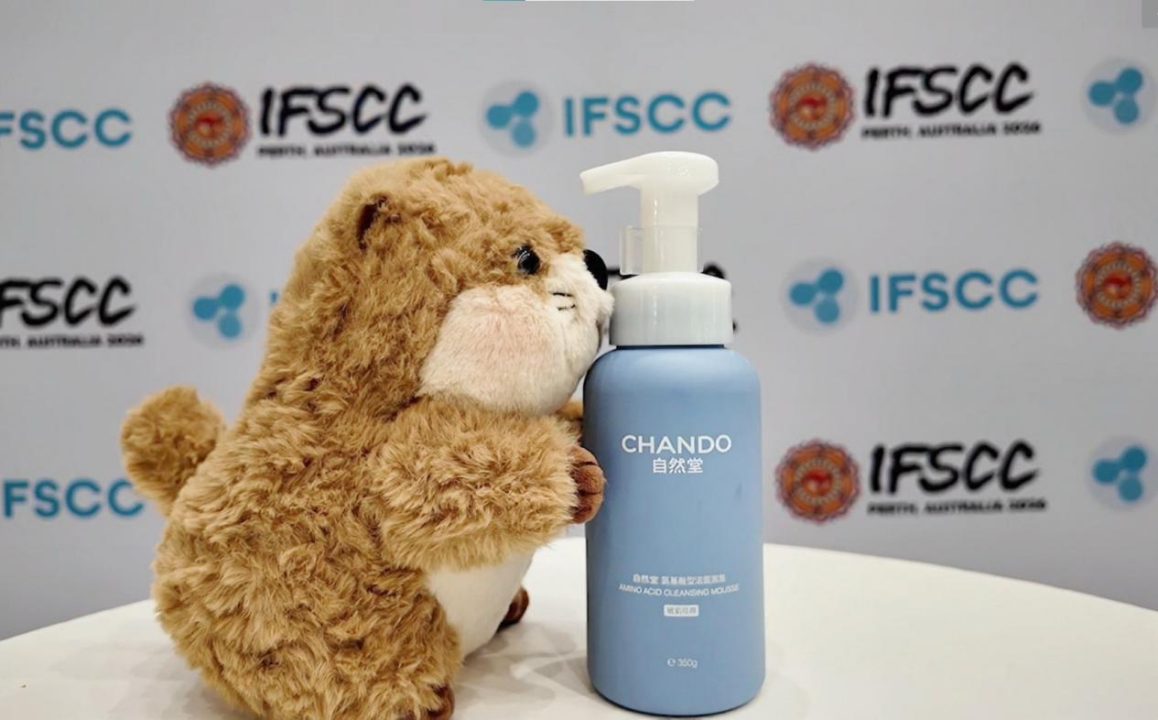
Photo: CHANDO’s Amino Acid-Based Cleansing Foam at IFSCC
The research CHANDO Group presented at this IFSCC Congress also extended into the popular field of sensory fragrance experiences. Working with universities, the Group has made the scientific transition from pleasant scents to demonstrable benefits. Recognizing the mental fatigue of modern life, including poor sleep and low energy, the Group draws on its accumulated research into the Himalayas’ extreme environments. From Nyingchi peach blossoms to Himalayan fir, it scientifically validates the benefits of each fragrance, making a pleasant scent more than a subjective experience and establishing verifiable restorative effects for body and mind.
Advancing Eastern Aesthetics Through Science and Technology to Elevate Chinese Beauty
According to reports, at the 2025 IFSCC Congress in Cannes, France, Chinese companies ranked second worldwide in the number of oral presentations and first in poster presentations. In the same year, China secured the right to host the 2032 IFSCC Congress. Chinese beauty research is rapidly gaining prominence on the international stage.
As a leading Chinese beauty company with a 12-year IFSCC journey, CHANDO Group has both witnessed and actively contributed to this progress. From its first accepted paper to its seventy-ninth, and from the Himalayas’ extreme-environment resources to AI-driven precision R&D, the Group continues to bring original Chinese research to the international stage through an independently developed and controlled, end-to-end scientific research system.
Guided by the principle of “independent R&D and global collaboration,” CHANDO Group’s R&D Center has built a complete innovation system spanning fundamental research, ingredient development, formulation innovation and clinical validation across three core disciplines: skin science, ingredient science and product science.
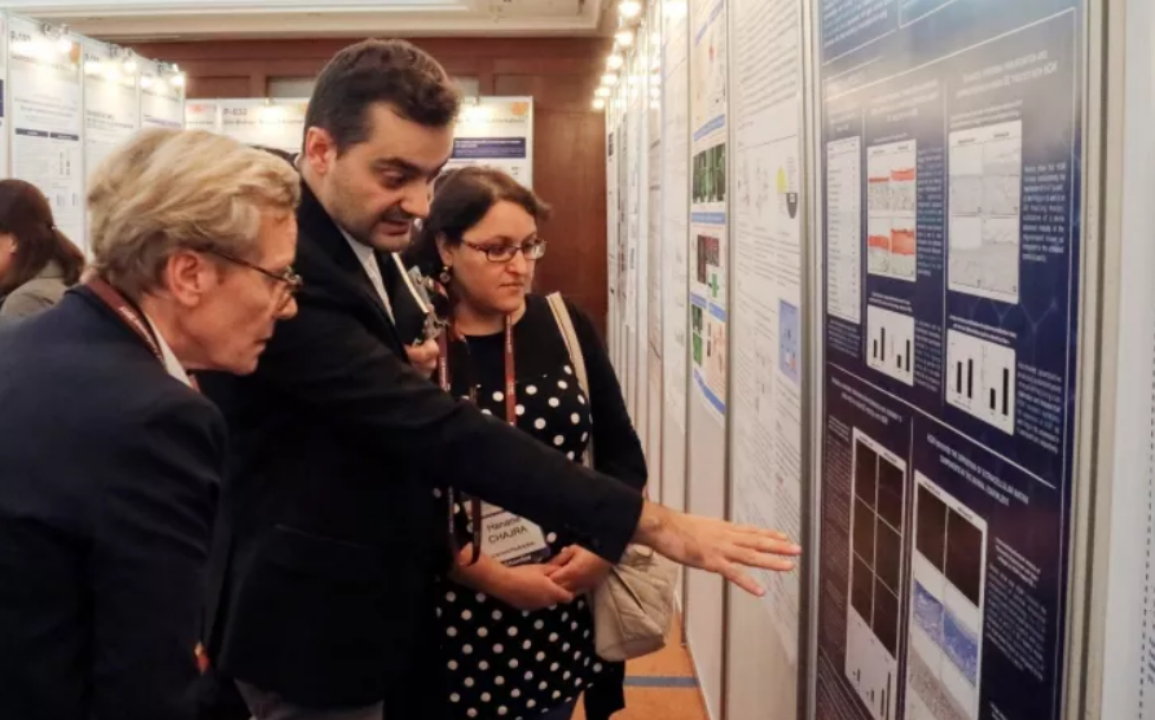
Photo: CHANDO Group’s participation in previous International Federation of Societies of Cosmetic Chemists (IFSCC) Congresses
The acceptance of 20 research contributions at IFSCC 2026 in Perth is another demonstration of CHANDO Group’s R&D capabilities. Looking ahead, the Group will continue to increase its R&D investment and deliver more original, breakthrough research, driving China’s beauty industry forward from “Made in China” to “Created in China.”