
Recently, an original research paper titled “Changes in Human Skin Microbiota and Skin Physiology Under Simulated Microgravity Conditions Using Head-Down Bed Rest” was officially published as an Original Research Article in Space Medicine & Medical Engineering. The study was jointly conducted by CHANDO Group, serving as the corresponding author's institution, the Astronaut Center of China, the Shenzhen Green Aerospace Interstellar Space Technology Research Institute, and Shanghai Institute of Technology. According to the available literature, this is the first academic paper in China to feature the substantial involvement of a cosmetics company's research team in systematically investigating changes in skin microbiota and skin physiology under simulated microgravity conditions. The publication marks a significant milestone in integrating space medicine into skin science research within China's cosmetics industry. It also represents an important step forward for Chinese beauty companies in advancing space medicine research and translating scientific discoveries into everyday skincare solutions.
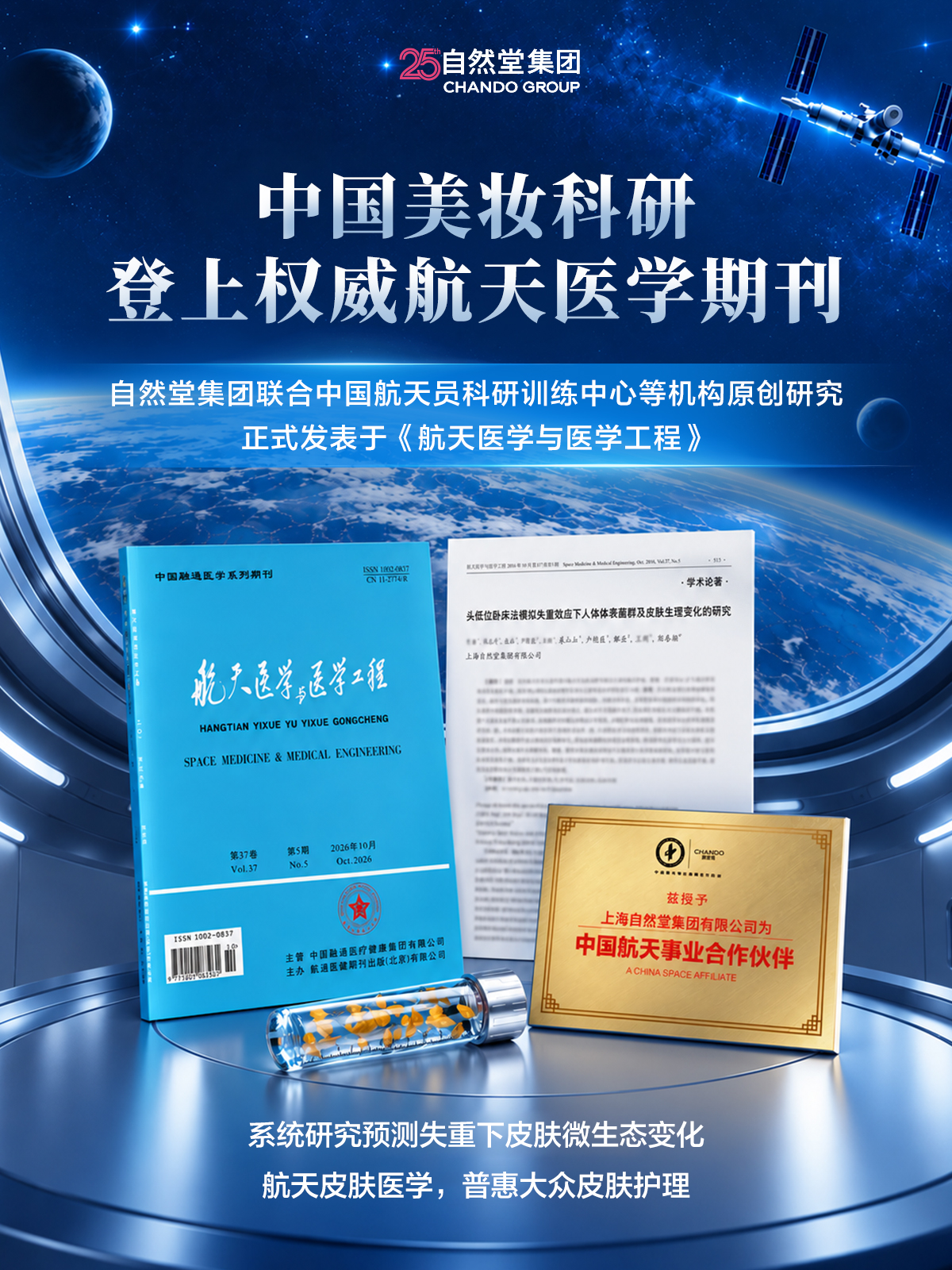
CHANDO Group’s Research Paper on Changes in Human Skin Microbiota and Skin Physiology Under Simulated Microgravity Conditions Published in Space Medicine & Medical Engineering
“One Day in Space, One Year on Earth”: Revealing How Chronic Stress Accelerates Skin Changes
The research was published in Space Medicine & Medical Engineering, a journal established in 1988 and named by renowned scientist Qian Xuesen. It is China's only academic journal dedicated to aerospace medicine and engineering, as well as one of the country's earliest specialized medical journals to explore the integration of medicine and engineering. The journal employs a double-blind peer review process. The publication of this study as an Original Research Article following rigorous evaluation by this authoritative academic platform signifies professional recognition within the field of space medicine for its research focus, experimental design, and data quality.“One day in space, one year on Earth.” In skin science, this expression is more than a poetic metaphor; it also reflects an underlying experimental rationale. Space environments and their ground-based simulations offer a rare form of “extreme laboratory.” Under confined and simulated microgravity conditions, certain skin changes that may take years to emerge under normal circumstances can become accelerated and more pronounced, providing a valuable experimental setting for investigating mechanisms associated with accelerated aging and evaluating skincare products.CHANDO Group participated in this research through the “Earth-Star II” 90-day head-down bed rest experiment organized by the Astronaut Center of China. Head-Down Bed Rest (HDBR) is internationally recognized as the gold standard for ground-based microgravity simulation. Leading space agencies, including the National Aeronautics and Space Administration (NASA) and the European Space Agency (ESA), have adopted this approach in microgravity research.
The research team continuously monitored eight skin sites across six volunteers, collecting a total of 192 microbial samples. High-throughput sequencing was used to analyze microbial community structures, while key physiological parameters—including skin hydration, sebum secretion, and transepidermal water loss (TEWL)—were recorded at multiple time points. By examining skin microbiota and physiological conditions together, the researchers identified two key findings: First, simulated microgravity significantly altered the structure of skin microbial communities, with distinct changes observed across different body sites. Microbial communities in exposed areas, such as the forehead, became increasingly similar among volunteers, suggesting the potential for cross-transmission of skin microorganisms under microgravity conditions. This finding may help explain observations that eczema, contact dermatitis, and allergies account for 40% of reported illnesses among crew members during space station missions. Second, changes in sebum secretion were closely correlated with changes in the relative abundance of Propionibacterium, a genus of bacteria commonly found on human skin. This indicates a close relationship between sebum production and skin microbiome homeostasis. When the balance of these key microbial communities is disrupted, the skin may become more susceptible to barrier impairment, sensitivity, acne breakouts, and signs of aging.
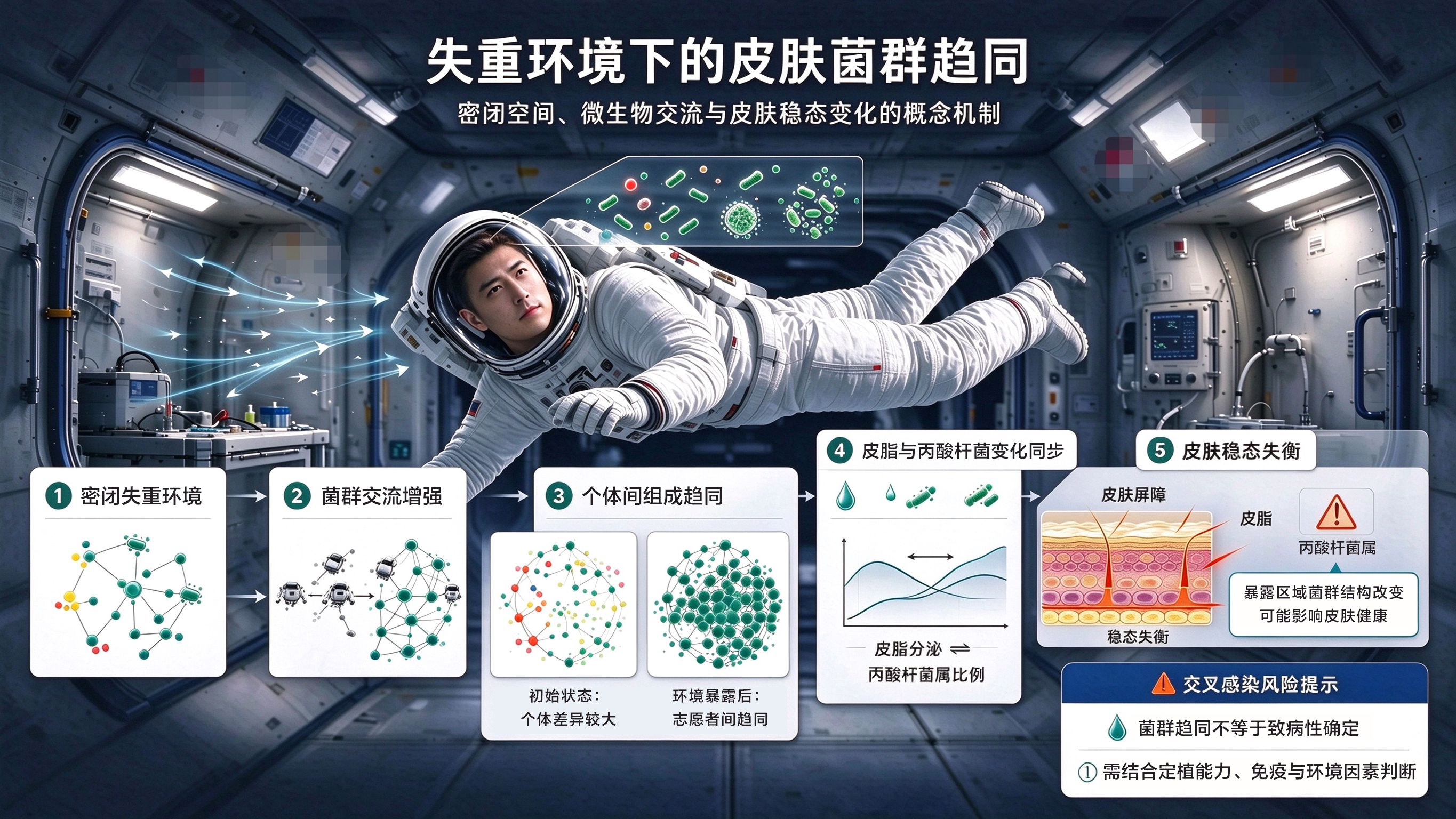
Illustration of the Study’s Findings on Skin Microbiome Convergence Under Simulated Microgravity Conditions (AI-generated for illustrative purposes only)
Supporting Space Missions While Bringing Scientific Innovation to Everyday Skincare
Although this research originated from the need to maintain skin health in space, its significance extends far beyond space missions. By uncovering skin-related mechanisms that become more apparent under extreme conditions, CHANDO Group aims to translate these scientific insights into product research and development, ultimately benefiting consumers in their daily lives. Extreme environments act as a magnifying glass for everyday skin concerns. The skin changes accelerated and amplified in space may reflect challenges experienced on Earth as a result of stress, insufficient sleep, seasonal transitions, and environmental pollution—only at a slower pace and in less noticeable ways. The findings point toward a targeted approach to skincare: identifying critical intervention windows and reinforcing three essential lines of defense—maintaining an appropriate balance of skin hydration and sebum, preserving skin microbiome homeostasis, and repairing the stratum corneum barrier. The research also highlights the importance of developing differentiated skincare solutions for different areas of the body.
These mechanisms and approaches, investigated under extreme conditions, will provide a scientific foundation for developing soothing, repairing, and anti-aging skincare products with enhanced efficacy, safety, and reliability. They also offer a valuable research framework for understanding the mechanisms underlying conditions such as eczema, contact dermatitis, and skin allergies, as well as informing future product development. Skincare is evolving from intuition-driven routines toward science-based solutions. For CHANDO Group, the goal is to transform space dermatology research into verifiable scientific achievements, establish differentiated technological capabilities, and strengthen consumer confidence in product safety and efficacy.
From the Himalayas to Space: CHANDO Group’s Long-Term Commitment to Aerospace Research
As a partner of China's space program, CHANDO Group has consistently pursued an approach centered on “Research in Extreme Environments, Innovation for Everyday Life,” advancing its research in space dermatology. Through the Joint Laboratory for Space Skincare Technology, established in collaboration with aerospace research institutions, CHANDO Group has already incorporated space dermatology research into the development of everyday skincare products. Several products, including BIORRIER Barrier Repair Cream (728 Cream), MAYSU Age-Defying Firming Cream, CHANDO Platinum Collagen Cream, and CHANDO Polar Essence, have undergone rigorous testing in ground-based space simulation chambers, providing empirical evidence supporting their safety and efficacy. In 2020, BIORRIER 728 Cream also completed a 15-day human clinical efficacy study under simulated microgravity conditions using head-down bed rest. The study evaluated and demonstrated its preventive, protective, and repairing effects against skin concerns associated with simulated microgravity.
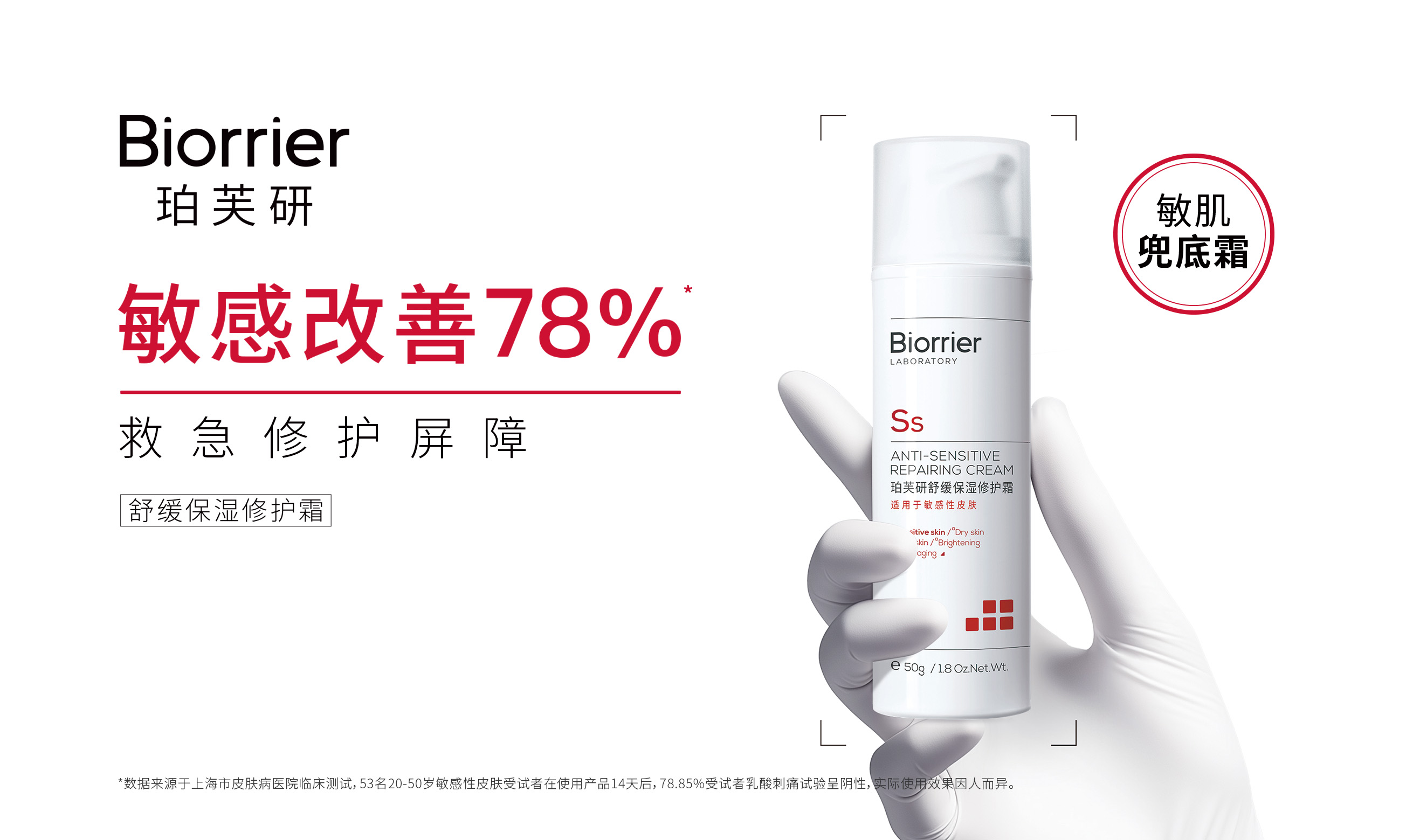
BIORRIER 728 Cream
CHANDO Group's journey in aerospace research dates back to 2013, when it first sent yeast strains into space aboard the Shenzhou-10 spacecraft to conduct ingredient research. Since then, the Group has continued to expand its scientific exploration through a series of studies on skin health and product efficacy under space-related environmental conditions. As its research advances into some of the most extreme environments known to humanity, CHANDO Group remains guided by a fundamental belief: The most extraordinary vitality often emerges from the harshest environments. By translating discoveries in space dermatology from laboratory research into product innovation, and ultimately bringing these advances to consumers around the world, CHANDO Group seeks to harness scientific insights gained under extreme conditions to provide gentle, science-backed care for skin here on Earth.